Guide
Privacy-preserving Telemedicine Sample App
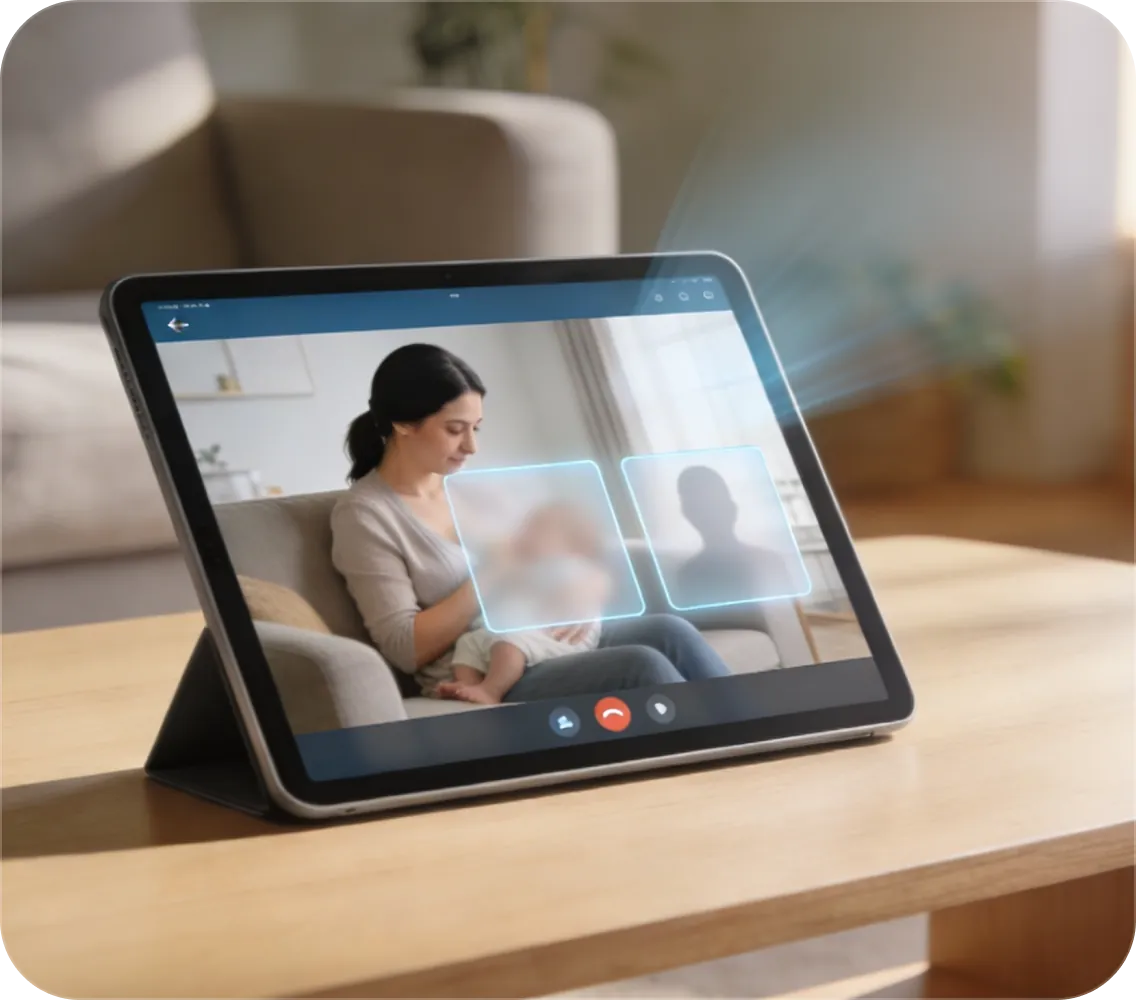
Open-source on-prem telemedicine sample app. On-device video segmentation and blur before transmission. HIPAA, GDPR, and EHDS-aware reference architecture.


Open-source on-prem telemedicine sample app. On-device video segmentation and blur before transmission. HIPAA, GDPR, and EHDS-aware reference architecture.
fhir_ips_export is an open-source Flutter package that generates an International Patient Summary (IPS) PDF directly from a list of FHIR R4 resources. Two components do the work. FhirIpsBuilder constructs the IPS Composition from the resources. FhirIpsPdfRenderer turns that Composition into a polished, customisable PDF. MIT-licensed, built and maintained by Life Value. Powers the medical-passport feature in HealthWallet.me.
The International Patient Summary (IPS) is the HL7-defined, EU-EHDS-aligned, globally portable summary of a patient's most critical clinical information. The IPS Composition is the FHIR resource that holds it. Allergies, medications, problems, immunisations, procedures, devices, results, vitals, history, and care plans. Until now, no clean Flutter package exists that takes a Bundle of FHIR resources and produces an IPS PDF a patient can hand to any clinician in any country.
fhir_ips_export solves that. The package is split into two layers so each one can be replaced or extended independently.
sectionOrder parameter.buildFromRawResources accepts raw JSON resources (the dump of a FHIR Bundle.entry array) and constructs the Composition from input to output.IpsData object (which holds the Composition plus supporting resources) into a polished PDF.The package matches the HL7 IPS Implementation Guide section coverage. Apple Health, Google Health Connect, Epic MyChart, and Oracle Cerner HealthLife all export to FHIR R4. Feed those exports into the package and you have an IPS PDF in a few seconds, generated on the patient's device, never transmitted anywhere.
| # | Section |
|---|---|
| 1 | Medication Summary |
| 2 | Allergies and Intolerances |
| 3 | Problem List |
| 4 | Immunizations |
| 5 | History of Procedures |
| 6 | Medical Devices |
| 7 | Diagnostic Results |
| 8 | Vital Signs |
| 9 | History of Illness |
| 10 | Pregnancy History |
| 11 | Social History |
| 12 | Plan of Care |
| 13 | Functional Status |
| 14 | Advance Directives |
| Data location during PDF generation | On-device only. The Bundle is parsed in-memory. Nothing leaves the device unless you choose to share the resulting PDF. |
| PHI handling | The package operates on PHI by definition. It processes the patient's medical history. Wrap it in a HIPAA-compliant deployment. The calling app must be a Business Associate or covered entity, with the usual safeguards. |
| FHIR conformance | Implementation Guide. HL7 International Patient Summary R4. The output Composition validates against the canonical IPS profile. |
| Cures Act / TEFCA alignment | The package operates on the same FHIR R4 resources that Cures-Act-compliant EHRs (Epic, Oracle Cerner, MEDITECH Expanse, athenaOne) expose via patient-access APIs. |
| GDPR Article 9 | Treats health data as special-category. No telemetry. No external network calls during PDF generation. |
| Languages | Dart (Flutter / Dart-native) |
| Distribution | pub.dev/packages/fhir_ips_export |
| Source | github.com/LifeValue/fhir_ips_export |
| Licence | MIT |
| Maintainer | Life Value (Tech Stack App SRL) |
| Powers | HealthWallet.me. See the case study for the integration pattern. |
The IPS is a HL7-standardised, globally portable summary of a patient's most critical clinical information. Allergies, medications, problems, immunisations, procedures, devices, results, vitals, history, plans, and directives. It is designed to be readable in any country, by any clinician, in any language, even without access to the originating health system.
If you can feed the package a list of FHIR R4 resources (typically the entries of a FHIR Bundle), the package handles the rest. The buildFromRawResources convenience method even accepts raw JSON, so a Dart developer with no prior FHIR experience can ship the first integration in an afternoon.
Yes. The renderer accepts a custom logo (as SVG), section ordering, and optional language-tag overrides. For deeper customisation (colours, typography, table layouts), the renderer is designed to be subclassed. Extend FhirIpsPdfRenderer and override the per-section render methods.
Yes. The package does not call any network. It runs entirely on the device. The resulting PDF can be saved, shared via system share-sheet, AirDropped, uploaded to a cloud drive, or printed.
Yes. Both platforms now export to FHIR R4. Feed the export into the builder and out comes an IPS Composition. Different export sources surface different sections. Apple Health typically gives vitals, allergies, conditions, and medications. Google Health Connect adds activity and labs.
It is the engine behind HealthWallet.me's medical-passport feature. The PDF a HealthWallet user adds to Apple Wallet or Google Wallet for emergency-room sharing. We open-sourced the package separately because the use case is broader than HealthWallet.
Submit your name and email through the form at the bottom of this page. We send you the pub.dev link, the GitHub repo with the example app, a sample FHIR Bundle (anonymised, IPS-conformant) so you can test without writing your own resources first, and a short setup guide PDF.
Last reviewed: 30 May 2026.
From deep-dive research to practical frameworks, explore a growing collection of resources that empower healthcare leaders to make informed decisions.